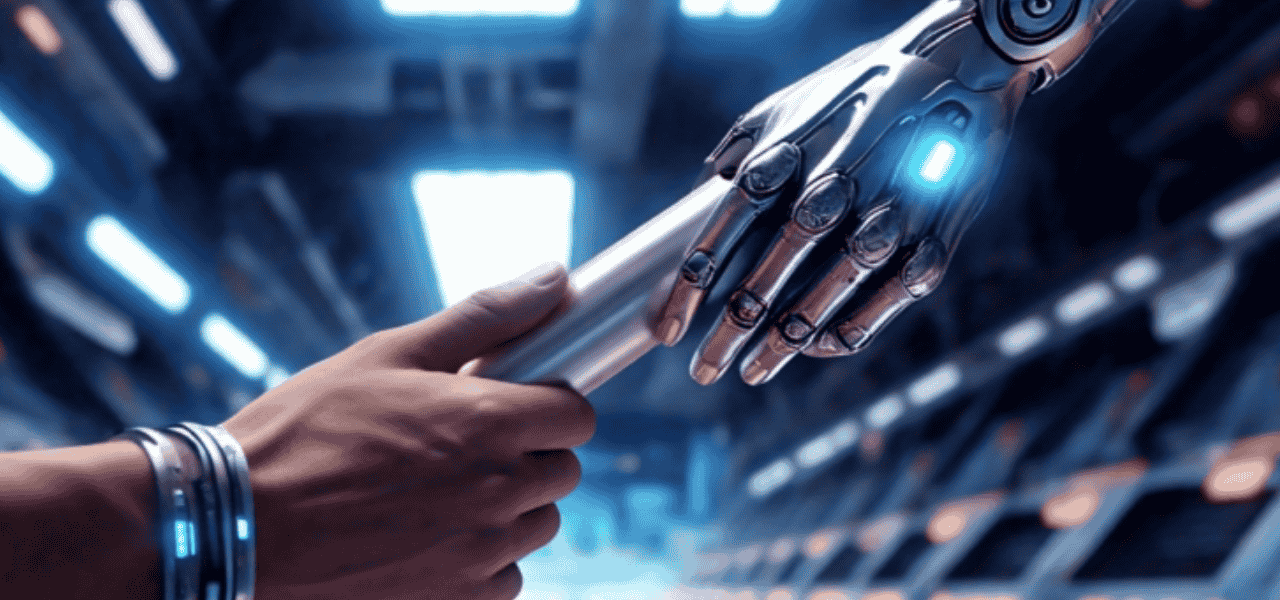
Just this week, Sam Altman shared a compelling vision in his blog, noting a shift to models capable of complex reasoning. In his blog, he shared a bold vision: “AI agents could join the workforce by 2025,” ushering in a new era of productivity through AGI (Artificial General Intelligence). But Altman’s focus extends further—toward superintelligent systems that could “massively accelerate scientific discovery and innovation well beyond what we are capable of doing on our own.” This raises deeper questions about the future of inventorship and IP protection in a world where machines may one day invent independently.
Just a few years ago, many doubted AI could write coherent text or create art. Today, these are routine. As we contemplate superintelligence, perhaps the question isn’t if, but when and how it will transform the process of invention and innovation.
First, let’s understand where we are: Current AI systems like ChatGPT, Google Gemini, and Microsoft Copilot excel at writing, analyzing data, creating images, and solving problems. Tools like MidJourney and Runway ML generate visuals and videos, while platforms like Soundraw compose music. These systems, despite their sophistication, process information solely within their trained capabilities and lack true understanding or independent thought.
While AGI represents the next step—matching human-level intelligence across domains—superintelligence promises something far more revolutionary. How might a system that doesn’t just match but dramatically surpasses human cognitive abilities approach the creation of new inventions? What happens when machines can conduct research, devise complex systems, and solve problems beyond human comprehension?
DABUS (Device for the Autonomous Bootstrapping of Unified Sentience), an AI system created by Stephen Thaler, highlighted the current limits of AI in inventorship—it was rejected as an inventor under legal frameworks that define inventors as a human or natural person. Patent offices worldwide argued that true autonomy and intent, qualities inherent to human inventors, were missing. DABUS, though capable of generating creative outputs like “a food container constructed using fractal geometry” and “a flashing beacon for attracting attention,” operates strictly within predefined parameters, relying on human programming for its processes. In contrast, superintelligent systems, if realized, could surpass these constraints by autonomously identifying problems and generating novel solutions across diverse domains. How would the very concept of inventorship evolve when machines can independently create breakthroughs that humans may struggle to comprehend?
These developments raise profound questions about patent law’s fundamental concepts:
Patent Filing & Examination: How can patent offices assess novelty and non-obviousness when superintelligent systems generate thousands of inventions daily? Would the “person skilled in the art” standard still apply when inventors far exceed human expertise? New frameworks could be essential to keep pace with superhuman innovation, potentially requiring AI-driven tools to assist examiners in evaluating the originality and technical contribution of these inventions.
Ownership & Inventorship: Who owns superintelligent-created inventions—the developers, the deploying companies, or the systems themselves? The concept of inventorship may require a complete redefinition, including new legal criteria for assigning rights. This could spark debates over whether the economic benefits of these inventions should be distributed differently, perhaps through shared ownership models or even public domain contributions.
Technical Disclosure: How do we enable disclosure for inventions created through processes beyond human comprehension? If humans can’t understand the inventive steps, can the patent system still fulfil its role of disseminating knowledge? This challenge could lead to new disclosure requirements, where AI-generated inventions are accompanied by simplified explanations or detailed logs of the AI’s processes to meet legal standards.
Patent Value & Strategy: If superintelligent systems can rapidly “design around” existing patents, is traditional IP protection still viable? Companies will need to rethink their patent strategies to compete in this new era of invention, potentially prioritizing shorter patent cycles, faster commercialization, or alternative protections like trade secrets to maintain competitive advantages.
We may be approaching a transformative era—a centuries-old patent system meeting superintelligent inventors. Could our current IP frameworks adapt, or do we need entirely new paradigms? How might we balance accelerated technological progress with meaningful human participation in the invention process?
While the timeline and feasibility of superintelligence remain uncertain but promising, its potential to reshape invention and IP protection offers a compelling area for exploration. As innovation accelerates, engaging in these discussions will be crucial for both IP professionals and companies striving to stay at the forefront of patent protection.
Disclaimer: This article explores speculative concepts related to superintelligence and its potential impact on intellectual property law. The views expressed are intended to spark discussion and do not constitute legal advice or definitive predictions about future developments in AI or patent systems. Readers are encouraged to consult legal professionals for specific guidance on intellectual property matters.